Facts & figures: UK Care Home Sector
The UK care home sector is an essential component of our healthcare system, providing residential care for individuals who require assistance with daily activities, including bathing, dressing, and eating.
The care home sector in the UK is larger than most people may realise – according to www.carehome.co.uk, there are about 17,100 care homes in the UK looking after more than 400,000 people.
Care homes in the UK are divided into two primary categories: residential care homes (70%) and nursing homes (29%). Residential care homes provide assistance with daily activities and basic medical care, while nursing homes offer more complex medical care and supervision from trained nurses.
The UK care home sector is a significant employer, with around 1.6 million people working in the social care sector. However, the sector faces significant challenges, including a shortage of skilled workers, high staff turnover, and funding constraints.
One of the most significant challenges facing the UK care home sector is funding. Care homes are expensive to run, and many residents rely on government funding to pay for their care. However, funding for social care has not kept pace with the increasing demand for care, resulting in significant financial pressures for care homes.
Another issue facing the UK care home sector is attracting workers to the sector. According to the annual report published by Skills for Care found there were a total of 1.79 million posts in adult social care. Of these 1.62 million were filled, leaving 165,000 posts unfilled.
Reasons to be positive
Despite the challenges facing the UK care home sector, there have been efforts to improve the quality of care provided. New inspection methods have been implemented and the government has increased funding for social care. There have also been initiatives to improve the training and support provided to care home workers.
Key stats (source: www.carehome.co.uk)
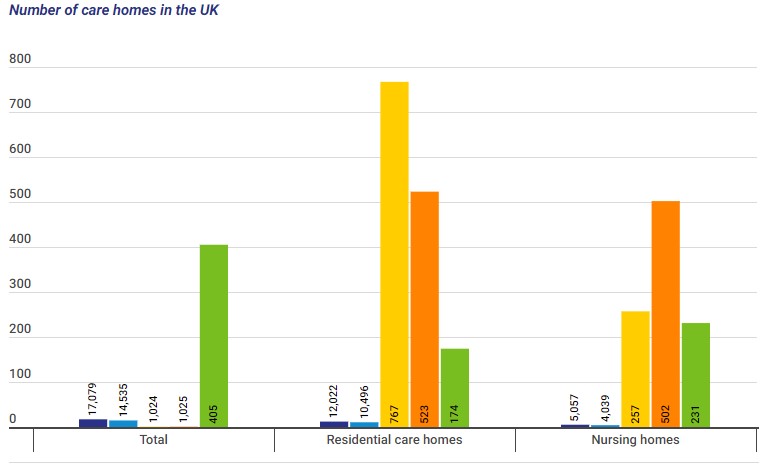
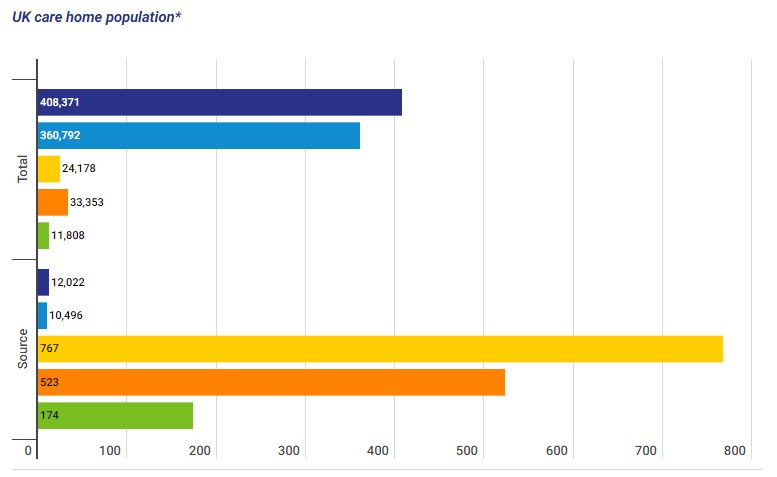
*There is no UK-wide dataset as each country is responsible for its own data collection. This means there are discrepancies in the ways data is collected and reported. The figures above should be viewed as estimates.