Facts & figures – Dental Sector
Braemar Finance has been providing funding for Dentists for nearly 30 years. In that time, the team has built up an impressive body of knowledge and continue to keep a close eye on the latest developments in the sector. In this report we share our findings…

Market size
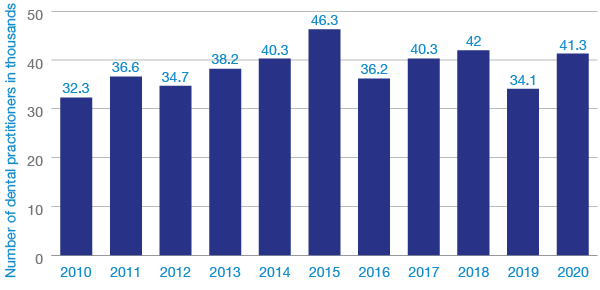
In 2020, there were approximately 41.3k dental practitioners employed in the UK, down from a high of 46.1k in 2015. In recent years the number of dental practitioners has fluctuated somewhat, but the general trend – since 2010 – has been upward, when the number of practices stood at 32.3k. In the UK, dental practitioners are defined as providing general primary care dental services to patients.
How often is too often?
In a survey of British individuals in 2018, it was found that 41% of respondents visit the dentist at least twice a year. The often-quoted advice is to have a dental check every six months, but the recommended time needed between consultations depends on the oral health of the individual. This means the time between check-ups can range from three months to even two years between consultations.
Gender
In 2018/19 there were more female NHS dentists in England than male for the first time, with this trend continuing in 2019/20 (12,659k female; 12,025 male). The number of female dentists has increased in every year since 2008/09, while during the same period male dentist numbers have declined slightly.
Age
In 2019/20, over 9k NHS dentists in England were aged below 35 years of age, the highest number across the age groups. The only age group which has seen a decline in numbers over the provided time interval is among those aged 45 to 54 years, dropping from just above five thousand in 2008/09 to slightly below five thousand in 2019/20.
Northern Ireland
Since 2004 there has been a gradual increase in the number of dentists practicing in Northern Ireland. The number has risen from 750 to 1,147 dentists in 2020.
Size – by turnover
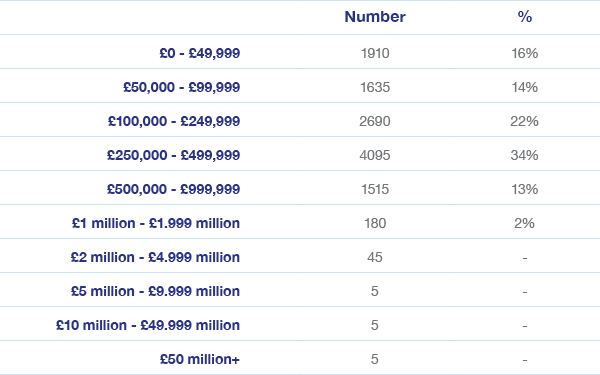
With over 12k dental practices in the UK, those in the £250k - £499k category made up a third of the total number.
Patient experience
A large number of respondents in a 2018 survey rated their experience of NHS dental services as positive. Just over half evaluated the services as very good, while a further 33% valued their experience as fairly good. Additionally, since 2006 there has been a general increase in public satisfaction of dental services in the UK. Consequently, dentistry services scored a higher satisfaction score compared to the NHS overall in 2018.
Reasons for seeking private dental care
Almost 35% of adults who were using private dental care reported they were doing so because the dentist they used went private and they decided to stay with that practice. Furthermore, over a quarter of respondents said they believed that private dental care is better, which is why they prefer it.
Clinical treatments – adults
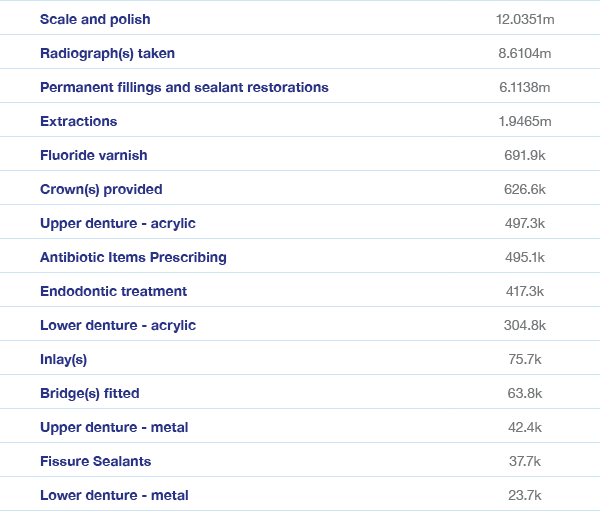
In 2019/20, over 12 million scale and polishes were carried out by NHS dentists on adults in England, followed by approximately 8.6 million radiographs and 6.1 million fillings and sealant restorations.
Clinical treatments – children
Over 6.4 million fluoride varnishes were carried out by NHS dentists on children in England in 2019/20, followed by approximately 2.1 million fillings and sealant restorations and one million scale and polishes.
Expenditure on dental services in the United Kingdom 2005-2019Since 2005, household spending on dental services has almost tripled. In 2019, consumer spending on dental services stood at £3.243bn, up from £3.158bn in 2018, but down on 2017’s all- time high of £3.405bn.
The number of dentists employed in the UK has increased alongside the rise in spending on dental services, rising from 29.5k dentists in 2007 to over 35.5k in 2019, while the number of medical and dental technicians has fluctuated since 2010, amounting to 44k employed technicians in 2019.
Manufacturers' sales
The sales of medical and dental instruments, and supplies manufactured in the UK have steadily risen every year since 2013, from £2.6bn to £3.15bn in 2019.
Adults with active tooth decay in England
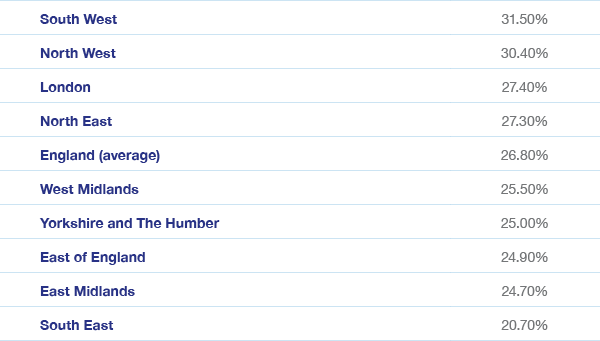
In 2018, almost 27% of adults in England had active tooth decay. The South West of England was the region with the highest prevalence of tooth decay among adults at 31.5%; in the South East, the figure was less than 21%.
Attitudes to teeth whitening
According to a survey carried out in February 2020, 22% of the British population said they probably would get their teeth professionally whitened, with a further 10% saying they definitely would or that they already had.
Two thirds of those over 65 years of age would ‘definitely not’ get their teeth whitened.
In the youngest age group, 18 to 24 years of age, 40% of respondents reported they probably would whiten their teeth.
Impact of Covid
Dentistry services have been severely impacted by Covid-19 with reports of over 30 million missed appointments during this period, and there can be no doubt the sector will require significant support on its roadmap to recovery.
Braemar Finance has supported the Dental Profession for almost 30 years and will continue to do so during these difficult times.
Data sources available on request.